Osteoarthritis (OA), the most common form of arthritis, is a serious chronic disease that affects an estimated 51.9 million U.S. adults1 and 527.8 million adults globally.2 Osteoarthritis is the most prevalent joint disease and a leading source of chronic pain and disability in the United States.3,4 While often considered a disease of old age, an estimated 11.6 million U.S. adults suffering with OA are of working age (20-64 years).5 OA may affect the knees, hips, hands, spine, or great toes6; current estimates indicate that there are 24.7 million, 1 in 10 U.S. adults, with knee osteoarthritis.7
Those who live with OA experience pain, stiffness, and swelling, which limits their function and mobility; these symptoms often impact osteoarthritis suffers in their daily lives. People living osteoarthritis may experience a variety of symptoms; for some, pain is mild and occurs occasionally, while for others pain is severe and chronic. Regardless of where patients are in their OA progression, their lives are impacted when everyday activities like walking a few blocks or going up and down stairs cause too much pain. In addition, many people with OA are also diagnosed with other chronic conditions, such as heart disease, diabetes, and obesity; these comorbidities add to the burden that osteoarthritis sufferers manage.
While OA is frequently described as a “wear and tear” disease, we understand it now as a disease of the whole joint, involving the cartilage, joint lining, ligaments, and bone.6 Characteristics of the disease include: degradation of tendons, ligaments and cartilage (the cushioning tissue between joints), bony changes of the joints, and inflammation of the joint lining (called the synovium).6 Palliative therapeutics compromise on efficacy, safety or durability. Currently, there are no approved treatments which alter the course of osteoarthritis; at Biosplice, we hope to change this with lorecivivint.
References
- Institute for Health Metrics and Evaluation (IHME). GBDx Results Tool. Seattle, WA: IHME, University of Washington, 2021. Available from http://ghdx.healthdata.org/gbd-results-tool [Accessed Jan 7, 2021; Results Permalink].
- Institute for Health Metrics and Evaluation (IHME). GBDx Results Tool. Seattle, WA: IHME, University of Washington, 2021. Available from http://ghdx.healthdata.org/gbd-results-tool [Accessed Jan 7, 2021; Results Permalink].
- Murray CJ, et al. The State of US Health, 1990–2010: Burden of Diseases, Injuries, and Risk Factors. JAMA. 2013; 210: 591–608.
- GBD 2019 Diseases and Injuries Collaborators. Lancet. 2020; 396: 1204–1222.
- Institute for Health Metrics and Evaluation (IHME). GBDx Results Tool. Seattle, WA: IHME, University of Washington, 2021. Available from [Accessed Jan 19, 2021; Results Permalink].
- American College of Rheumatology. Osteoarthritis. https://www.rheumatology.org/I-Am-A/Patient-Caregiver/Diseases-Conditions/Osteoarthritis. Accessed December 29, 2020.
- Institute for Health Metrics and Evaluation (IHME). GBDx Results Tool. Seattle, WA: IHME, University of Washington, 2021. Available from http://ghdx.healthdata.org/gbd-results-tool [Accessed Jan 7, 2021; Results Permalink].
Lorecivivint (SM04690)
Overview
Biosplice Therapeutics has developed an injectable small-molecule inhibitor of the CDC2-like kinase (CLK) and dual-specificity tyrosine regulated kinase (DYRK) family. Lorecivivint has demonstrated improvement in pain and function as well as structural benefit.
Biosplice submitted a new drug application (“NDA”) to the US Food and Drug Administration in late 2025.
In various well-controlled studies, lorecivivint has demonstrated improvements versus placebo in pain, function and medial joint spade width (“mJSW”) as measured by x-ray (a measure of disease progression).
Mechanism of Action
Since its discovery in the early 1980s the Wnt pathway has increasingly been recognized as a critical cell signaling pathway that affects tissue health and homeostasis. Simply put, Wnt proteins interact with stem cells, which reside in all adult tissues, to orchestrate tissue remodeling.
Recently, increased understanding of cartilage growth mechanisms during OA progression and aging has identified Wnt signaling to play a critical role in OA pathogenesis, particularly cartilage and subchondral bone remodeling. Wnt pathway upregulation in diseased joints, which can occur through age, obesity, trauma or overuse, contributes to cartilage degeneration and OA disease progression.
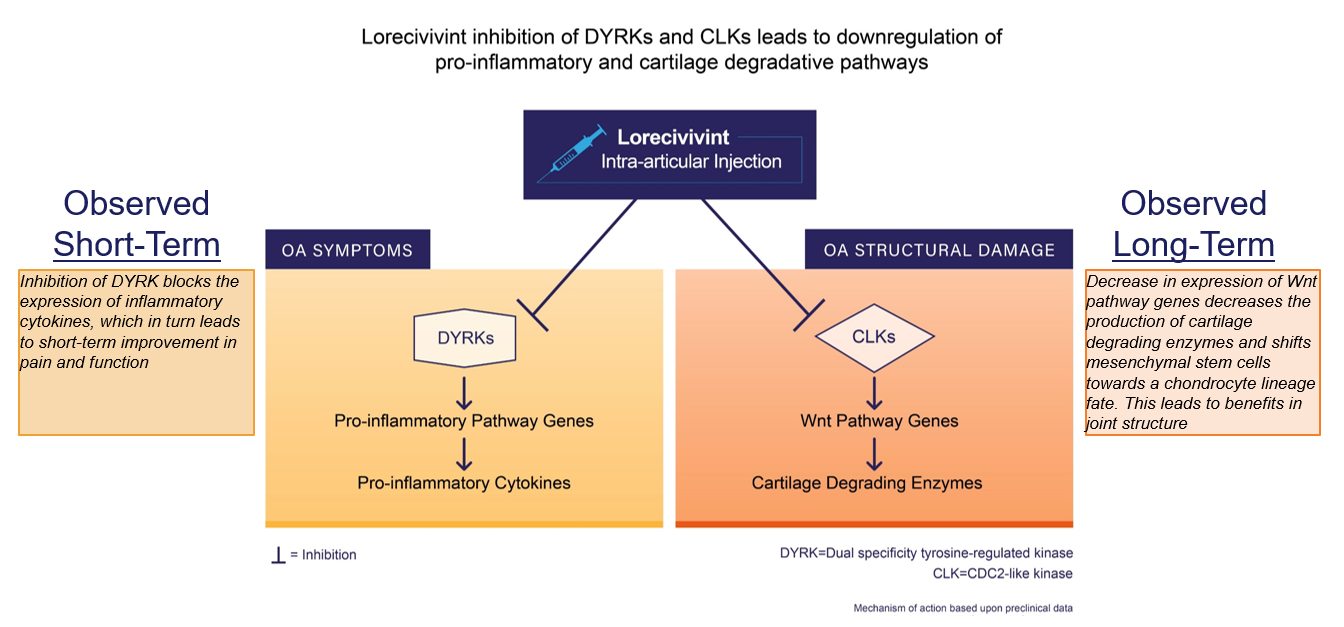
Lorecivivint potently inhibits the DYRK1A kinase, producing a powerful anti-inflammatory affect, resulting in both near-term pain relief and functional improvement.
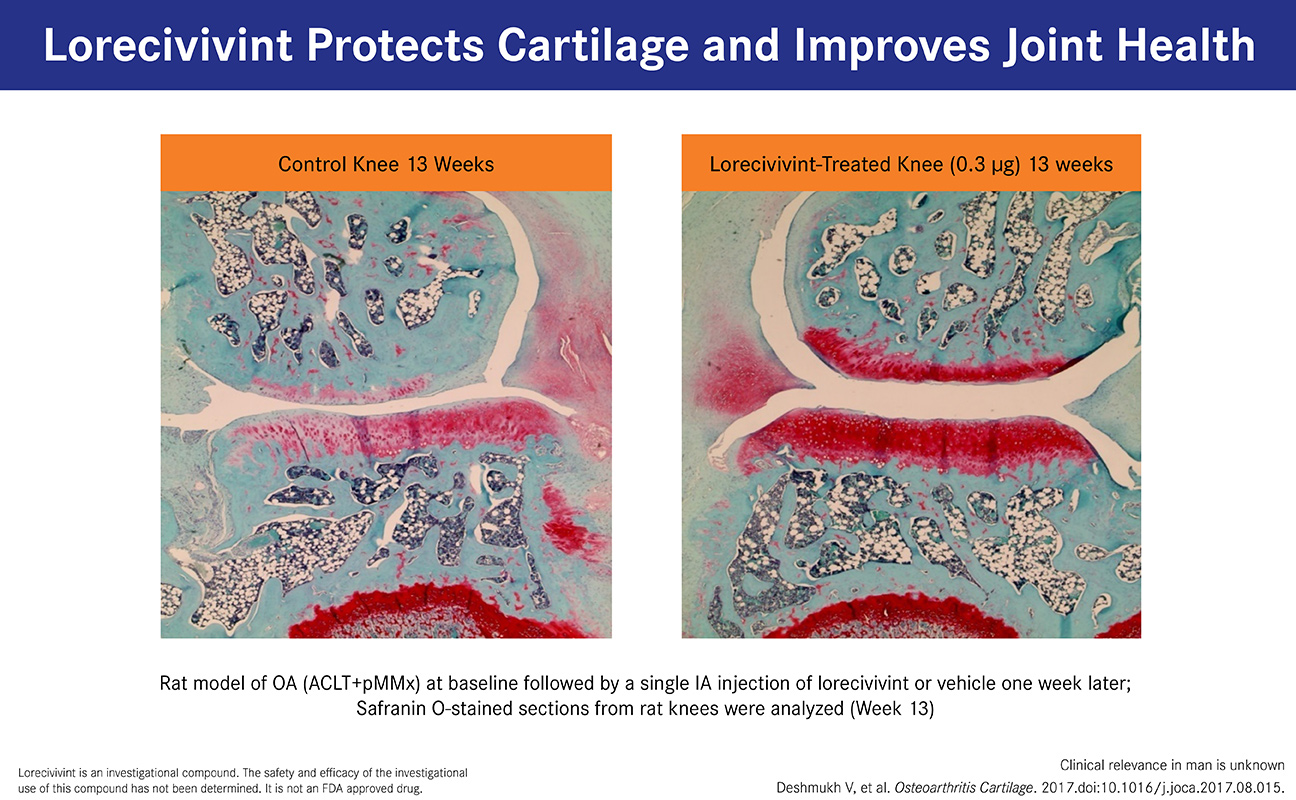
Through the selective inhibition of the kinases CLK2 and DYRK1A, lorecivivint downregulates downstream Wnt pathway proteins through alternative splicing (AS). This decreases cartilage breakdown, which results in cartilage protective effects. Downregulation of the Wnt pathway also prompts mesenchymal stem cells to develop into chondrocytes. This both protects and replenishes the hyalin cartilage matrix, leading to structural improvement and long-term pain benefit.
Data to Date
Pain
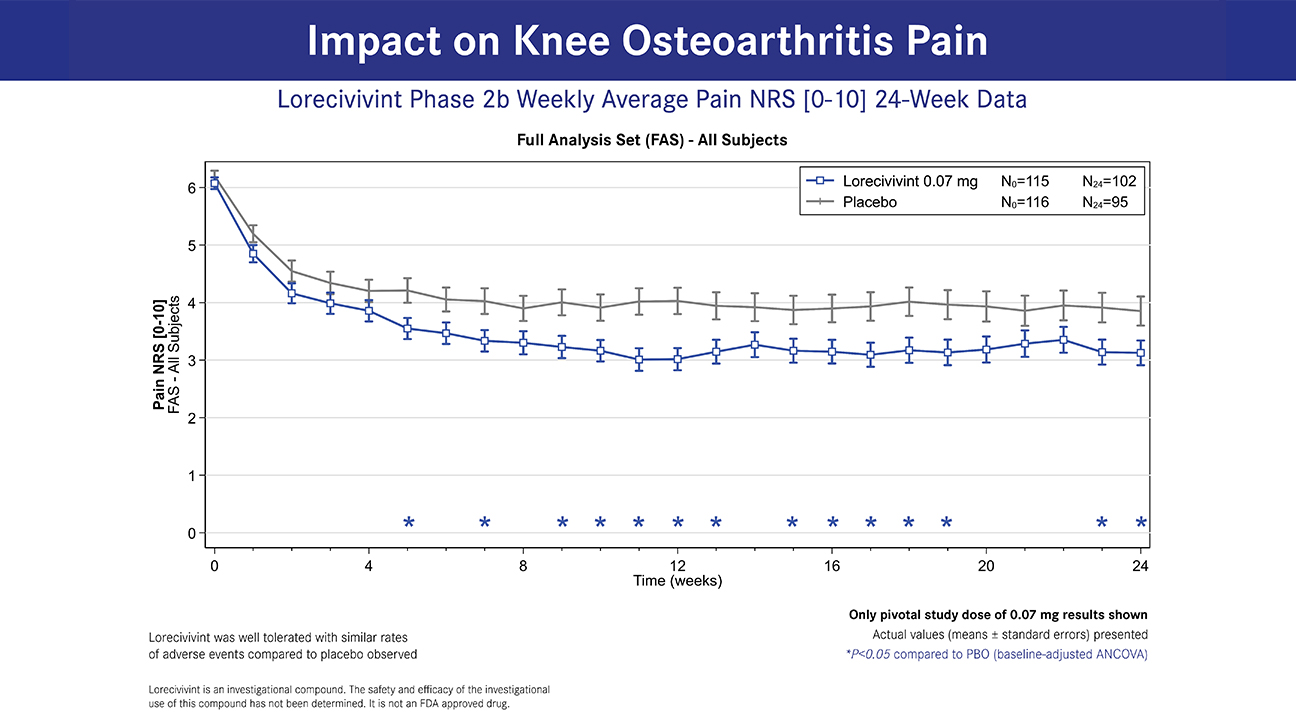
In the OA-07 Phase 3 study, lorecivivint demonstrated statistically significant improvements in WOMAC Pain (patient reported) versus placebo at 6 months and 12 months following a single injection.
Function
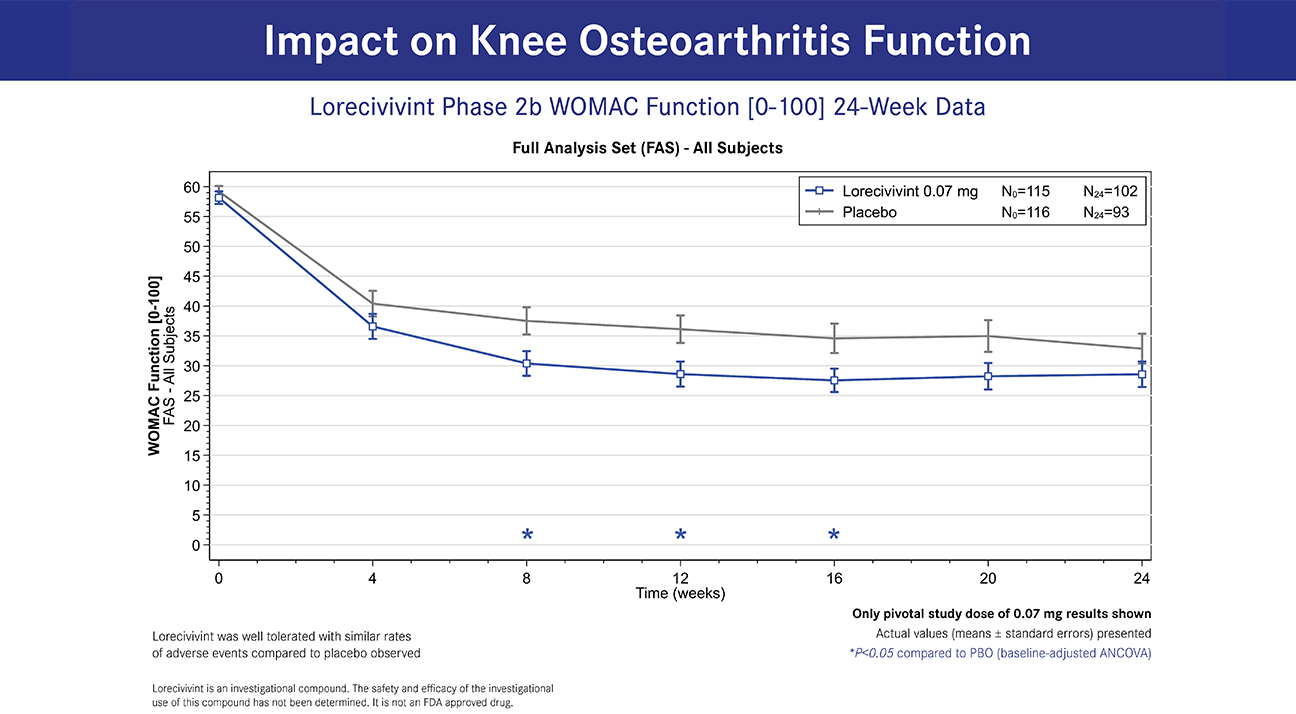
In the OA-07 Phase 3 study, lorecivivint demonstrated statistically significant improvements in WOMAC Function (patient reported) versus placebo 12 months following a single injection.
Safety and Bone Health
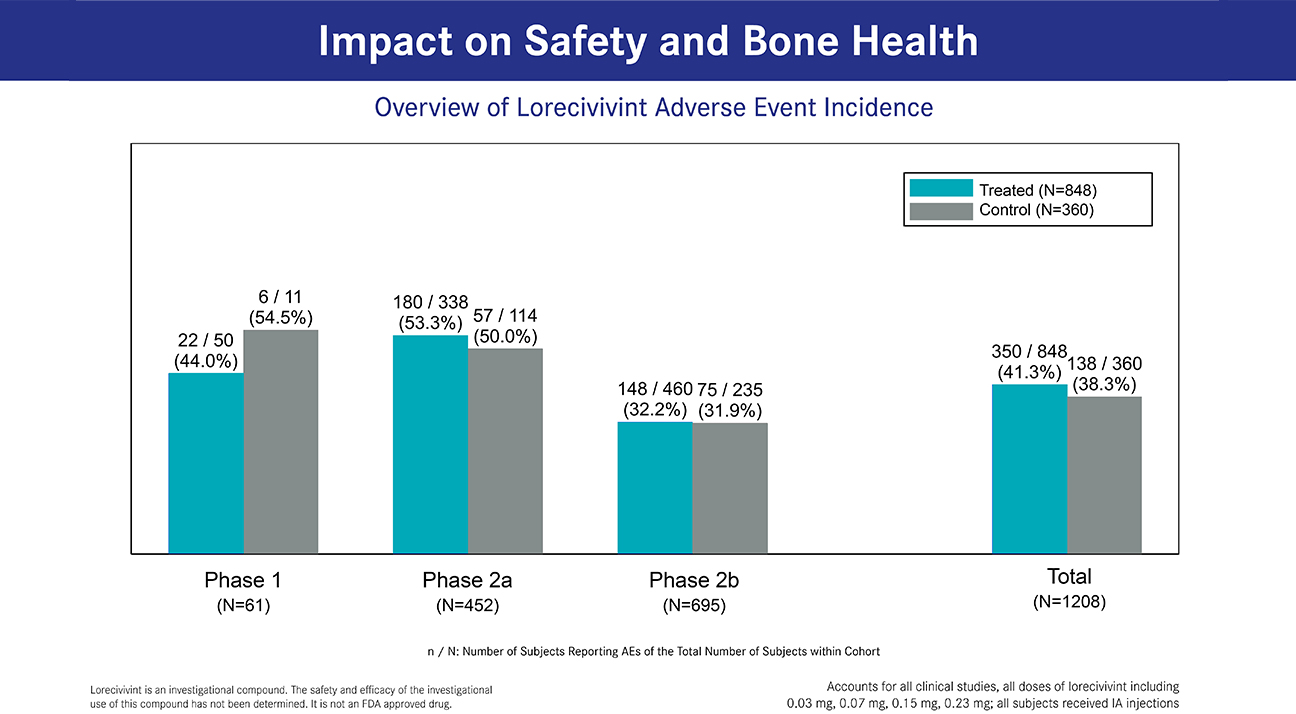
To date, more than 1,700 subjects have been treated with lorecivivint in clinical trials. Across all clinical trials, lorecivivint has appeared well tolerated with similar rates of adverse events compared to placebo and no evidence of systemic exposure. All SAEs observed were deemed unrelated to lorecivivint by investigators.
Structure and Cartilage
While improvements in pain or function are typically required for FDA approval, the most urgent unmet need in knee osteoarthritis is a pharmaceutical solution that will slow or reverse the progression of the disease. To measure disease progression, X-ray is the most commonly used and studied tool. In the OA-07 Phase 3 study, Biosplice examined medial joint space width (medial JSW) over two years for treated patients against placebo. Clinicians and practicing physicians treating osteoarthritis commonly use mJSW as a measure of joint health, as decreasing mJSW predicts knee replacement in clinical practice.
The figure below demonstrates LOR’s ability to improve medial JSW with a yearly injection over two years. Notably, the placebo group declines over the first year, and then receives a LOR injection (crossover), and subsequently improves medial JSW. At two years, we compare both LOR and the crossover group to an extrapolated placebo line based on natural history of the disease (in which non-treated patients consistently lose between 0.1 and 0.2 millimeters of joint space width per year).
Lorecivivint is an investigational compound. The safety and efficacy of the investigational use of this compound has not been determined. It is not an FDA approved drug.
Publications
American College of Rheumatology (ACR) Convergence Annual Meeting | October 24 - 29, 2025
Rheumatology and Therapy | January 04, 2025
-

Evaluation of Safety and Efficacy of a Single Lorecivivint Injection in Patients with Knee Osteoarthritis: A Multicenter, Observational Extension Trial
American College of Rheumatology (ACR) Annual Meeting | November 14 - 19, 2024
ACR 2023 | November 10 - 15, 2023
Rheumatology and Therapy | October 30, 2023
-

Safety, Tolerability, and Pharmacokinetics of Same-Knee Intra-Articular Injection of Corticosteroid and Lorecivivint Within 7 Days: An Open-Label, Randomized, Parallel-Arm Study
ACR 2022 | November 11 - 14, 2022
ACR 2022 | November 11 - 14, 2022
ACR 2022 | November 11 - 14, 2022
ACR 2022 | November 11 - 14, 2022
Osteoarthritis Research Society International (OARSI) World Congress | April 07 - 10, 2022
The American Journal of Sports Medicine | January 10, 2022
-

Comparing Patient-Reported Outcomes From Sham and Saline-Based Placebo Injections for Knee Osteoarthritis: Data From a Randomized Clinical Trial of Lorecivivint
The American Journal of Sports Medicine. doi: 10.1177/03635465211067201
World Congress on Osteoporosis, Osteoarthritis, and Musculoskeletal Diseases | August 26 - 28, 2021
Rheumatology and Therapy | June 08, 2021
-

Individual Participant Symptom Responses to Intra-Articular Lorecivivint in Knee Osteoarthritis: Post Hoc Analysis of a Phase 2B Trial
Rheumatology and Therapy. doi: 10.1007/s40744-021-00316-w
European League Against Rheumatism (EULAR) | June 02 - 05, 2021
European League Against Rheumatism (EULAR) | June 02 - 05, 2021
ClinicoEconomics and Outcomes Research | May 21, 2021
-

Real-World Health Care Resource Utilization and Costs Among US Patients with Knee Osteoarthritis Compared with Controls
ClinicoEconomics and Outcomes Research. doi: 10.2147/CEOR.S302289
Osteoarthritis Research Society International (OARSI) Virtual World Congress | April 29 - May 03, 2021
Osteoarthritis Research Society International (OARSI) Virtual World Congress | April 29 - May 03, 2021
Osteoarthritis and Cartilage | February 12, 2021
-

A Phase 2b Randomized Trial of Lorecivivint, a Novel Intra-articular CLK2/DYRK1A Inhibitor and Wnt Pathway Modulator for Knee Osteoarthritis
Osteoarthritis and Cartilage. doi: 10.1016/j.joca.2021.02.004
Orthopaedic Research Society (ORS) | February 12 - 16, 2021
Journal of Medical Economics | August 13, 2020
-

Health care resource utilization and burden of disease in a U.S. Medicare population with a principal diagnosis of osteoarthritis of the knee
Journal of Medical Economics. doi: 10.1080/13696998.2020.1801453
European League Against Rheumatism (EULAR) | June 03 - 06, 2020
European League Against Rheumatism (EULAR) | June 03 - 06, 2020
Arthritis & Rheumatology | May 20, 2020
-

Lorecivivint, a Novel Intra‐articular CLK/DYRK1A Inhibitor and Wnt Pathway Modulator for Treatment of Knee Osteoarthritis: A Phase 2 Randomized Trial
Arthritis & Rheumatology. doi: 10.1002/art.41315
European Workshop for Rheumatology Research (EWRR) | February 13 - 15, 2020
American College of Rheumatology (ACR) | November 08 - 13, 2019
American College of Rheumatology (ACR) | November 08 - 13, 2019
American College of Rheumatology (ACR) | November 08 - 13, 2019
Cartilage Regeneration & Joint Preservation Society (ICRS) World Congress | October 05 - 08, 2019
Cartilage Regeneration & Joint Preservation Society (ICRS) World Congress | October 05 - 08, 2019
Gordon Research Conference (GRC) - Wnt Signaling Networks in Development, Disease and Regeneration | August 11 - 16, 2019
European League Against Rheumatism (EULAR) | June 12 - 15, 2019
European League Against Rheumatism (EULAR) | June 12 - 15, 2019
Osteoarthritis and Cartilage | May 24, 2019
-

Modulation of the Wnt pathway through inhibition of CLK2 and DYRK1A by lorecivivint as a novel, potentially disease-modifying approach for knee osteoarthritis treatment
Osteoarthritis and Cartilage. doi: 10.1016/j.joca.2019.05.006
International Society for Pharmaeconomics and Outcomes Research (ISPOR) | May 18 - 22, 2019
Academy of Managed Care Pharmacy (AMCP) | March 25 - 28, 2019
American Academy of Orthopaedic Surgeons (AAOS) | March 12 - 16, 2019
Orthopaedic Research Society (ORS) | February 02 - 05, 2019
International Cartilage Regeneration & Joint Preservation Society (ICRS) Summit | January 17 - 18, 2019
American College of Rheumatology (ACR) | October 19 - 24, 2018
American College of Rheumatology (ACR) | October 19 - 24, 2018
Asia Pacific League of Associations for Rheumatology (APLAR) | September 06 - 09, 2018
European League Against Rheumatism (EULAR) | June 13 - 16, 2018
European League Against Rheumatism (EULAR) | June 13 - 16, 2018
European League Against Rheumatism (EULAR) | June 13 - 16, 2018
Osteoarthritis Research Society International (OARSI) World Congress | April 26 - 29, 2018
Osteoarthritis Research Society International (OARSI) World Congress | April 26 - 29, 2018
World Congress on Osteoporosis, Osteoarthritis, and Musculoskeletal Diseases | April 19 - 22, 2018
World Congress on Osteoporosis, Osteoarthritis, and Musculoskeletal Diseases | April 19 - 22, 2018
International Cartilage Repair Society (ICRS) | April 09 - 12, 2018
International Cartilage Repair Society (ICRS) | April 09 - 12, 2018
International Cartilage Repair Society (ICRS) | April 09 - 12, 2018
International Cartilage Repair Society (ICRS) | April 09 - 12, 2018
American College of Rheumatology (ACR) | November 03 - 08, 2017
American College of Rheumatology (ACR) | November 03 - 08, 2017
Osteoarthritis and Cartilage | September 15, 2017
-

A small-molecule inhibitor of the Wnt pathway (SM04690) as a potential disease modifying agent for the treatment of osteoarthritis of the knee
Osteoarthritis and Cartilage. doi: 10.1016/j.joca.2017.08.015


Gordon Research Conference: Wnt Signaling | August 06 - 11, 2017
Osteoarthritis and Cartilage | July 13, 2017
-

A novel Wnt pathway inhibitor, SM04690, for the treatment of moderate to severe osteoarthritis of the knee: results of a 24-week, randomized, controlled, phase 1 study
Osteoarthritis and Cartilage, 25(10), 1598-1606. doi: 10.1016/j.joca.2017.07.006

International Cartilage Repair Society Heritage Summit | June 29 - July 01, 2017
European League Against Rheumatism (EULAR) | June 14 - 17, 2017
European League Against Rheumatism (EULAR) | June 14 - 17, 2017
International Society for Pharmacoeconomics and Outcomes (ISPOR) | May 20 - 24, 2017
International Society for Pharmacoeconomics and Outcomes (ISPOR) | May 20 - 24, 2017
Osteoarthritis Research Society International (OARSI) | April 27 - 30, 2017
American College of Rheumatology (ACR) | November 11 - 16, 2016
Osteoarthritis Research Society International (OARSI) | March 31 - April 03, 2016
Osteoarthritis Research Society International (OARSI) | March 31 - April 03, 2016
American College of Rheumatology (ACR) | November 06 - 11, 2015
American College of Rheumatology (ACR) | November 06 - 11, 2015
American College of Rheumatology (ACR) | November 06 - 11, 2015
Corporate Memberships and Collaborations
ORBIT Registry (Brigham and Women’s Hospital)
Biosplice Therapeutics is sponsoring the Osteoarthritis Registry of Biomarker and Imaging Trajectories (ORBIT). The data from this study will enhance our understanding of the natural history of knee osteoarthritis. This registry was developed in collaboration with investigators at Brigham and Women’s Hospital at Harvard Medical School.
PROGRESS OA (Foundation for the National Institutes of Health (FNIH) Biomarkers Consortium)
Biosplice Therapeutics is a partner on the FNIH Biomarkers Consortium’s PROGRESS OA Project: Clinical Evaluation and Qualification of Osteoarthritis Biomarkers. The project seeks to qualify imaging and biochemical biomarkers with the FDA as prognostic biomarkers of disease progression in knee osteoarthritis.
Osteoarthritis Research Society International (OARSI)
Biosplice Therapeutics is proud to be a Corporate Member of OARSI, the leading medical society for advancing the understanding, early detection, treatment, and prevention of osteoarthritis through its exclusive dedication to research. OARSI is the only organization that is exclusively dedicated to advancing osteoarthritis research.
International Cartilage Regeneration & Joint Preservation Society (ICRS)
Biosplice Therapeutics is proud to be a Corporate Member of the ICRS, the main forum for international collaboration in cartilaginous tissue research and joint preservation. The ICRS seeks to improve patients’ quality of life, decrease their disability, and reduce the impact of degenerative joint disease on healthcare systems worldwide.
STEpUP OA (Oxford University)
Biosplice Therapeutics is pleased to support Synovial fluid To define molecular EndotyPes by Unbiased Proteomics in OA (STEpUP OA), an Oxford University-led effort, which has created a partnership to characterize the synovial fluid protein signatures of osteoarthritis patients. Data generated as part of this endeavor may potentially guide clinical decision-making by allowing for better characterization of osteoarthritis disease stages and risk of progression.